Blogging Team 10: Nurdin Hossain, Ruizhang Chen, Hemanth Saravanan, Pranav Goteti, Hannah Cohen
Summary
During this class, the news team first discussed the ever-evolving opposition towards OpenAI through the lens of the QuitGPT movement. The team listed OpenAI’s political entanglements and advertising experiments as two primary reasons for the birth of QuitGPT. Professor Evans then reflected on the history of doomsday predictions and why they tend to fall short on their claims. He cited the recent death of Paul Ehrlich, author of the infamous 1968 book The Population Bomb, as a touchstone for why catastrophist thinking, while thought-provoking, tends to be both wrong and dangerous.
News Team: QuitGPT
Topic: Doomerism vs. Optimism
Lead Team: AI Impact on Jobs
News Team: QuitGPT
Slides: https://docs.google.com/presentation/d/1MTs4j5izavqyLpqwdQqlO1lofTqx7Yyq6W1sndQXbUg/edit?usp=sharing
The news team began the class by discussing the QuitGPT movement and ChatGPT’s growing controversy. The QuitGPT movement is a boycott that describes itself as “a grassroots campaign by the people, for the people” that is “organizing Americans and people around the world to quit ChatGPT”.
QuitGPT highlights OpenAI’s strong ties to the Trump administration. The article claims that, second only to Elon Musk’s Grok AI, OpenAI is the “worst”, having invested 26x more money into the administration than any other AI company and going as far as spending around 50 million dollars in an effort to prevent AI regulation at the state level. The site also mentions that OpenAI accepted the Pentagon’s request for unrestricted access to their AI for surveillance, training, and even war robots, despite other companies, such as Anthropic, having previously declined it, likely arguing that, although most current big AI companies are ethically questionable in some way, OpenAI truly is not on the side of its consumers. The site also mentioned that ChatGPT-4 is being used to power ICE’s resume screening tools, adding to the growing list of controversies. These publicly controversial decisions are causing people to move away from OpenAI, with the site claiming over 4 million people have already taken action (though the news team shared that other less biased sources estimated a number closer to 1–2 million). This, in addition to their excessive spending on the Trump Administration, is what the movement is framing as the main catalyst causing OpenAI to lose “3x more than they earn”, and they highlight that this might be their opportunity to deliver the final blow.
The discussion then pivoted to focus on the inclusion of ads in ChatGPT. Ads are only present for those with no subscription or the “ChatGPT Go” subscription, and they only appear after the bot’s response, never inside of it. OpenAI claims that the ads won’t impact the bot’s responses and that ChatGPT won’t even know that an ad is coming.
OpenAI also said that they’ll only advertise to people 18 years or older. While ChatGPT doesn’t explicitly ask for the user’s age, it can be estimated by looking at “general topics you talk about or the times of day you use ChatGPT”, according to OpenAI’s website.
Discussion. The class discussion, overall, revolved around sentiment about the inclusion of ads in AI chatbots and the earlier conversation about the QuitGPT movement. Some students felt that the ads are a necessary evil. With OpenAI being in debt, this is just their way of generating revenue without increasing their subscription fees. Additionally, discussion highlighted that ads are already a primary revenue model for the web, where we saw many service providers (Netflix, CrunchyRoll, YouTube) adopting this inclusion of ads into what used to be their free user experience, and sometimes even their paid ones over the last couple of years, and with the keyword-based advertising model popularized by Google having been hugely profitable, it is understandable why OpenAI chose the route it did.
Other students argued that this may only be the beginning. The news team mentioned that ChatGPT only advertises for a handful of companies right now—imagine what the responses will look like when they advertise for anyone who pays!
One student brought up the fact that ads potentially will affect model outputs in the future, following the inevitable trend that other services has followed, most notably Google’s transition from resisting advertising, keeping it clearly marked and separate from search results, to having everything about their services be worse because of the need to continue to feed the advertising revenue monster. The class also discussed the idea that some topics shouldn’t incorporate ads at all, such as health-related queries and other more serious matters.
The consensus on the QuitGPT movement seemed to be a sense of underwhelm. Some sources argue that it has real potential to make an impact, while others call it more of a meme than a movement. Appfigures reported that downloads of Anthropic’s Claude rose by over 200% in the month of February, largely due to its Superbowl ad. While ChatGPT isn’t going anywhere yet, its place as the most popular chat bot has become more unstable, and the QuitGPT movement will likely add to that instability.
Doomerism vs Optimism
Professor Evans discussed doomerism versus optimism. He mentions that there seemed to be many doomerism attitudes in class at the beginning of the semester and fearfulness about impact of the development of AI. As we went into this semester, we started exploring the pros and cons of AI with more critical thinking and a balanced (and hopefully more optimistic!) perspective.
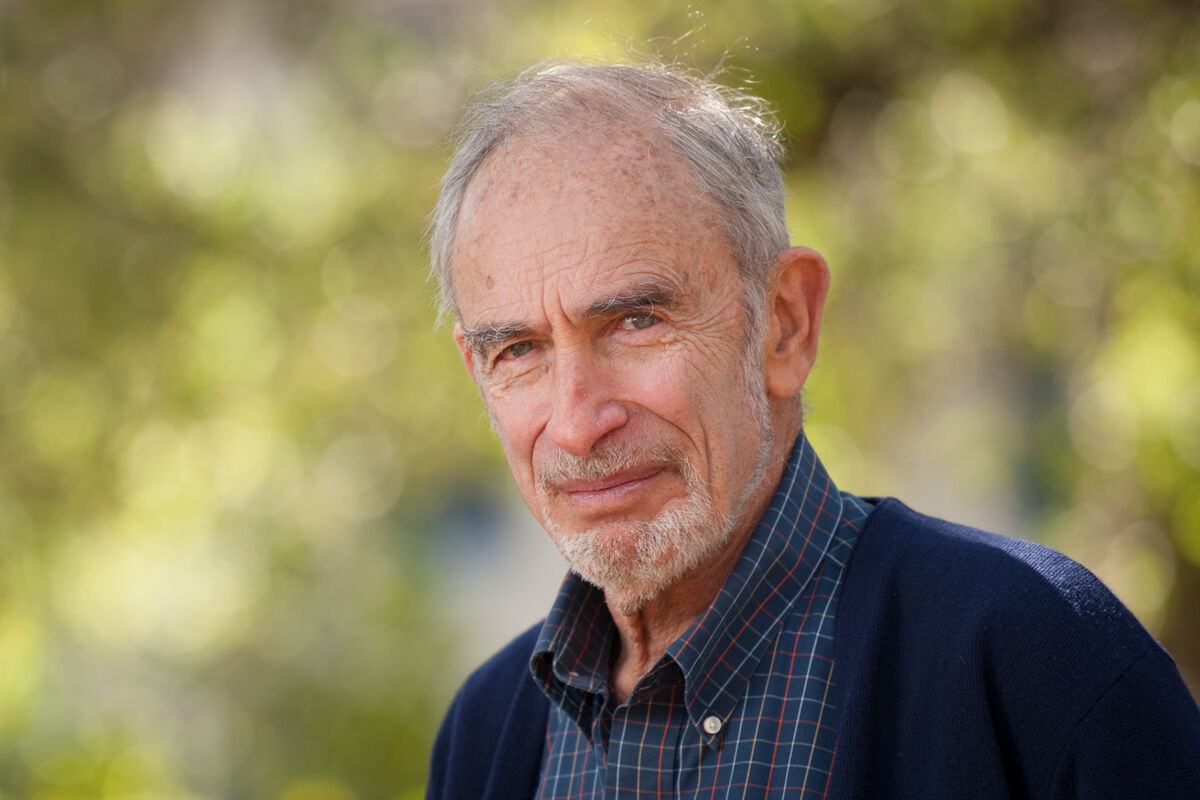
Figure 1: Picture of Paul R. Ehrlich. Source: Stanford
Paul R. Ehrlich is one of the most famous advocates of doomerism, who died recently at the age of 93.
In his best-selling 1968 book, The Population Bomb, Ehrlich forecasted global famines where millions would die, writing that “The battle to feed all of humanity is over. In the 1970s and 1980s hundreds of millions of people will starve to death”. Ehrlich advocated for authoritarian measures to control population. Though this book made him a leader in environmental movements back then, his unfulfilled predictions and stance brought him a lot of criticism.
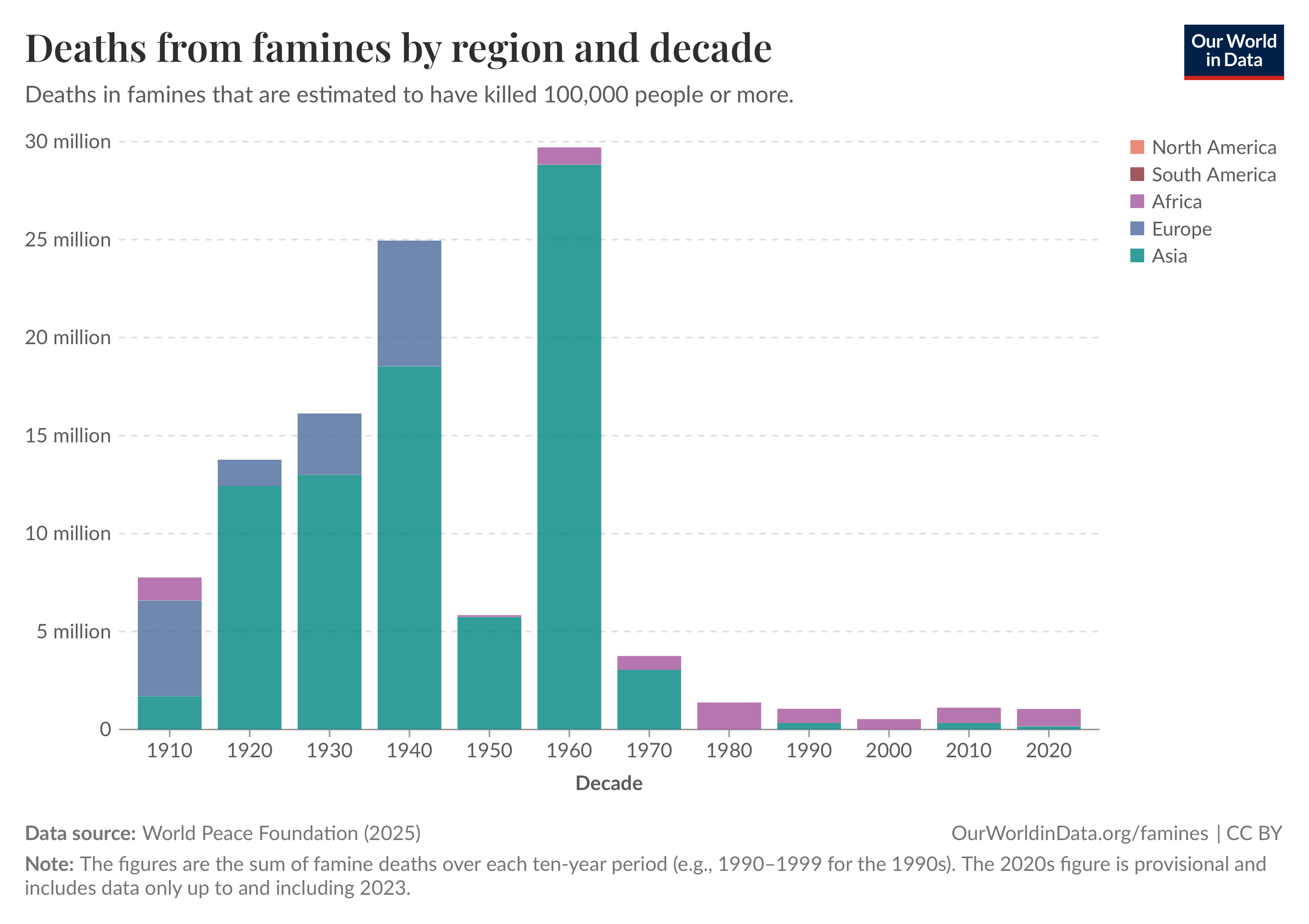
Figure 2: Deaths from Famines by Decade: Our World in Data
His predictions proved to be spectacularly wrong.
The Green Revolution’s advances, such as introducing HYV (high-yielding variety) seeds, new irrigation systems, synthetic fertilizers, and pesticides in the 1940s-60s, significantly improved agriculture and decreased famine-related deaths by a huge margin.
Starvation went up in the 1970s mostly due to Mao Zedong’s Great Leap Forward, which killed 15-55 million deaths by starvation. The One Child Policy was introduced later in China, which was largely based on Ehrlich’s theories. Paul Ehrlich also proposed research into prenatal sex determination (gender selection) as a population control measure, arguing that if parents could guarantee a male child first, they would not continue having more children in pursuit of a son.
Doomerism is dangerous and defeatist. We should be more optimistic.
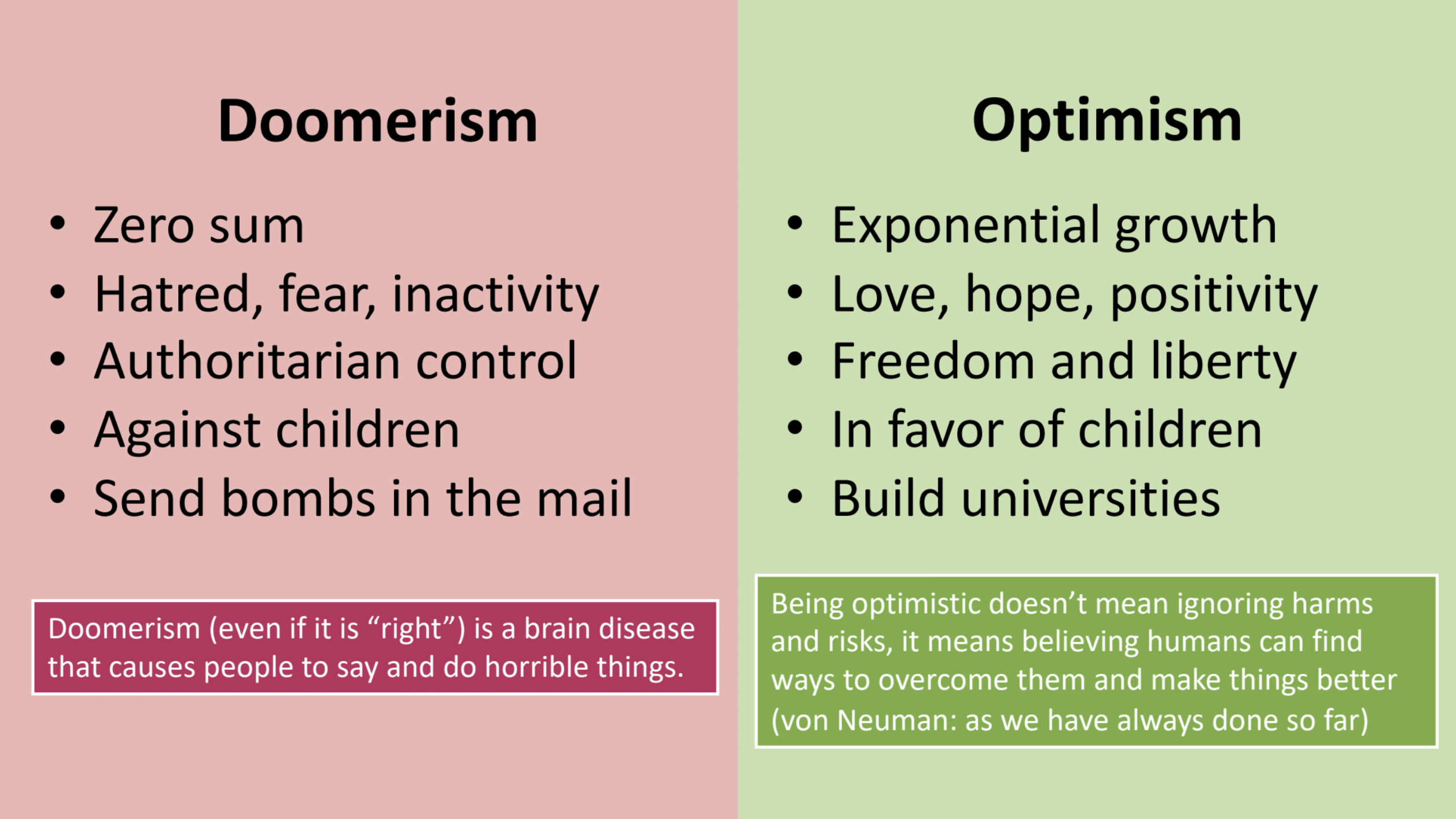
Figure 3: Doomerism vs Optimism: CS4501: AI and Humanity
The most hopeful answer is that the human species has been subjected to similar tests before and seems to have a congenital ability to come through, after varying amounts of trouble. To ask in advance for a complete recipe would be unreasonable. We can specify only the human qualities required: patience, flexibility, intelligence.
— John von Neumann, 1955
Being an optimist doesn’t mean ignoring real harms and existenting risks. It means having the historical perspective to realize that humanity has been subjected to immense tests before, and we have a remarkable, built-in ability to survive them.
We’ve faced similar challenges before and succeeded, so we should expect humanity to prevail again. As mathematician John von Neumann noted back in 1955, we don’t need a perfect recipe for the future. We just need the right human qualities: patience, flexibility, and intelligence.
Instead of retreating from progress, we need frameworks like techno-optimism—the belief that scientific and technological advances are the very tools we need to overcome our biggest hurdles. Thomas Jefferson founded UVA based on the “illimitable freedom of the human mind.” He argued that as new discoveries are made and circumstances change, our institutions and our thinking must advance to keep pace with the times. The challenges we face today are real, but they aren’t a reason to panic or withdraw. They are simply the next set of problems waiting for human ingenuity to solve.
Lead Team: AI Impact on Jobs
After the doomerism discussion, the lead team started with a table shuffle where three people from each table moved somewhere new followed by a couple icebreaker questions: What was your main takeaway from the readings, and do you think we should have more leisure time built into the workweek? Many seemed to agree that there should be more leisure time.
The lead team then went through a case study on how AI is changing the role of software engineers. One engineer described the shift as moving from “engineer” to “reviewer,” and Anthropic CEO Dario Amodei suggested that within 3 to 6 months, AI might be writing 90% of code. A 2025 study found that AI tools actually slow senior developers by 24%, and while recent research shows no major impact on overall employment, earlier data from 2022 points to declining opportunities for early career workers in AI-exposed fields.
The 3/17 reading from Anthropic goes deeper into that point about the job market. The paper introduces a new way of measuring AI’s impact on jobs called “observed exposure,” which looks not only at what AI can theoretically do, but what it’s actually being used for in work settings. Computer programmers came out on top at 75% task coverage, followed by customer service representatives and data entry keyers. On the employment side, the research found no increase in unemployment for workers in the most AI-exposed occupations, though there is some evidence that hiring younger workers has slowed down a lot. The overall idea seems to be that broad job loss hasn’t happened yet, but entry into certain careers seems to be getting a lot harder for people starting out.
Activity: Table Research and Briefs
During class, the lead team assigned each table with one of four specific careers and gave them time to research how each career would be impacted by AI. After research time was over, each table presented 60-second briefs on their findings and thoughts. Here are the careers we discussed and the insights the class had on them:
-
Education (K-12 and Higher Education): The impact of AI in education will depend heavily on the age of students. Personal connection and interaction are crucial for younger children in teaching soft skills like teamwork and empathy that AI cannot provide. For older students however, in high school and higher education, direct human interaction is less important and AI can prove much more useful. AI will be helpful in higher level tasks like explaining complex concepts and assisting with assignments, which could reduce a need for teaching assistants and other lower-level educators.
-
Product Management: Rather than being replaced, the role of PMs is expected to be augmented. Consumers often don’t know exactly what they want, so regardless of AI, PMs will remain important when it comes to translating customer needs to engineering teams or AI coding agents to ensure that the correct product is built. Lower level analyitical tasks like financial analysis, strategic planning, and contract reviews will likely be automated by AI, AI won’t be able to replace tasks that rely on leadership, vision, and accountability. However, over the next 20 years, the total number of PM roles might decrease as individual PMs will become much more effiecient and handle much larger workloads thanks to AI.
-
Researchers and Scientists: AI is a powerful tool when it comes to speeding up the research process by handling tedious, miscellaneous tasks and making workflows more efficient. However there is a possibility that AI will eventually drive the direction of research itself by focusing on problems it is more able to solve, currently humans are more in control.
-
Artists and Creatives: AI is projected to automate roughly 26% of creative tasks, meaning artists will likely need to learn how to leverage these tools to stay competetive. This impact will most likely be felt by entry-level illustrators, graphic designers, and photo editors, as AI has shown to be able to generate simple graphics and minimalist logos. AI will also make these jobs more efficient by adding more convenient tools and features for artists to use. While AI is capable of writing “average” plays, books, and songs, it stil is unable to replicate high-level content. Consequently, top creators such as museum artists, Grammy winners, Broadway stars, and live musicians will still remain highly valued for their unique talent that AI is unable to replicate yet.
Conclusion
As our discussions on QuitGPT and doomerism ultimately remind us, the future of AI is deeply uncertain.
A Washington Post analysis citing research from GovAI and the Brookings Institution paints this uncertainty well: while skills in fields like computer programming, marketing, and customer service have been thought by many to be most vulernable to AI, the workers in these fields are also highly skilled and are well-positioned to find new work.
Unfortunately, the picture is not completely optimistic. Researchers found that roughly 6 million clerical and administrative workers face a combination of high AI exposure and low adaptability (high risk of AI overtaking their jobs and low ability to pivot to other roles). Women make up approximately 86 percent of this group, suggesting the costs of automation will be inequally distributed across society.
One important note to consider is that economists have historically been far off the mark with respect to predicting how new technologies will shape labor markets. Whether AI proves to be the great disruptor many fear or simply the next chapter in a long history of technological adaptation, the outcome will depend less on the technology itself and more on the choices made by policymakers, companies, and workers in the years ahead.