The paper I talked about on “quantum cash” is Stephen Wiesner, Conjugate Coding, ACM SIGACT News, January 1983. [PDF]
Class 17
Readings for Week 10: Creativity
Readings/Listenings for Tuesday, 24 March and Thursdsay, 26 March
-
Listen to this segment: Musical DNA (RadioLab, 19 August 2010). (If you really want to read instead, there is a transcript, but you will miss a lot that is in the podcast.)
-
David Cope, Facing the Music: Perspectives on Machine-Composed Music. Leonardo Music Journal, 1999. (Unless you are double majoring in music, you are not expected to read Appendix A.)
-
Ted Chiang, Why A.I. Isn’t Going To Make Art, The New Yorker, 31 August 2024. [PDF] [Web Link]
-
Douglas Hofstadter organized a symposium on AI and creativity in 1997. You can see all 15 videos here: https://media.dlib.indiana.edu/collections/sq87bz201. There are talks on “Chess and Go”, “Language and Literature”, “Jokes and Humor”, “Musical Composition” (7 talks) and “The Big Picture”. I think you’ll find interesting and enlightening material in all of the vidoes (at least based on the subset I have sampled; I haven’t watched them all). You can choose any of the videos you want based on your interests. Hopefully you’ll find the one you choose (or switch if you don’t!) interesting and will want to watch the whole video, but its not necessary to watch the entire video, just to find something interesting, funny, or surprising in it and post a comment about it (including a link to the video and timestamp where you found it) in the discussion forum.
I encourage you to plan your time for all the readings for the week how it works best for you, but to make sure to at least listen to the RadioLab podcast and read the David Cope article before Tuesday’s class, and to post your discussion comment on the video from the symposium by Wednesday noon for the lead team has time to look at these before Thursday’s class.
Class 16
You can read Paul Ehrlich’s “The Population Bomb” on-line here: https://archive.org/details/populationbom00ehrl (you may need to register for a free Internet Archive account to read more than a few pages). Just make sure you have a barf bag nearby before you start reading it.
The New York Times glorification is here: Paul R. Ehrlich, Who Alarmed the World With ‘The Population Bomb,’ Dies at 93 — His best-selling 1968 book, which forecast global famines, made him a leader of the environmental movement. But he faced criticism when his predictions proved premature.
Updates and Tables for March 16-20
Schedule Reminders
-
Remember that your project update is due today, Monday 16 March, by 8:59pm: Project Update Canvas Link
-
For teams assigned to News (1) or Lead (6–7) this week, please remember to follow the revised guidelines and schedule (see March 10 post).
-
I will be away this Friday (20 March) and next Friday (27 March), and not able to hold my usual office hours those days. Please use https://davidevans.youcanbookme.com/ to schedule an alternate time to meet with me.
Tables for This Week
Here’s the Table Teams map for this week (March 17 and March 19 classes):
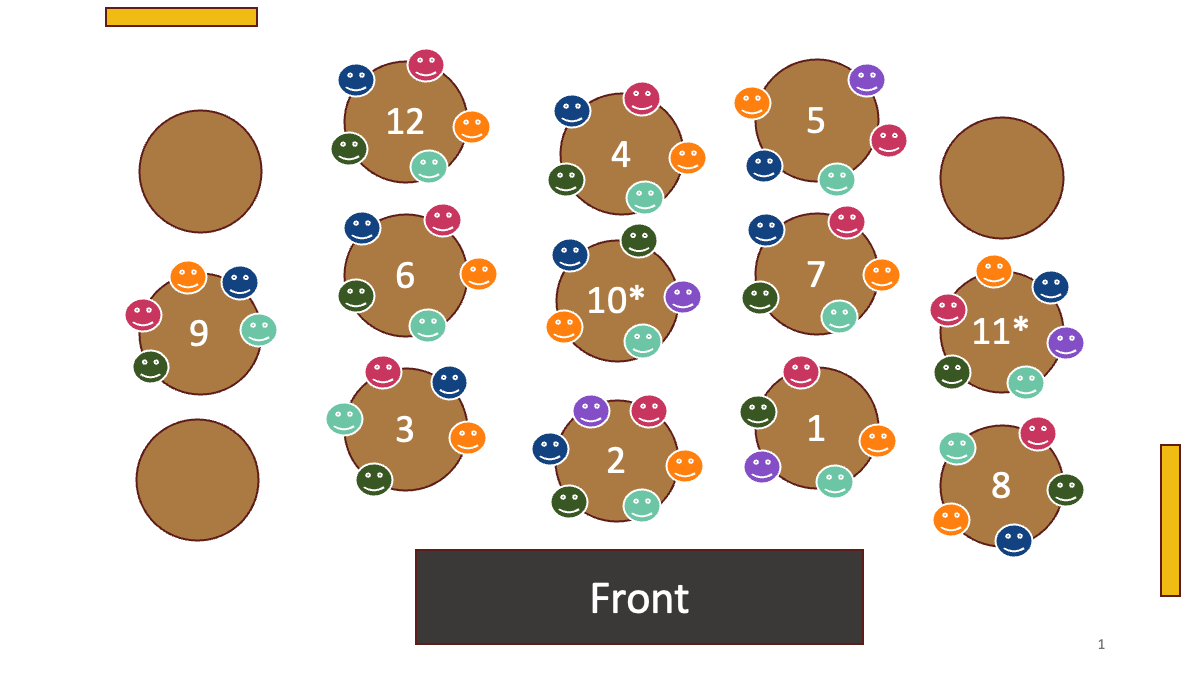
The blogging teams (Team 10 on March 17 and Team 11 on March 19) will swap places for the two classes, but otherwise the plan is the same for Tuesday and Thursday. The team that is blogging the class will have the (now stable!) center table.
Class 15
The Veritasium video I mentioned is: The Most Important Algorithm Of All Time.
Readings for Week 9
Readings for Tuesday, 17 March
- Maxim Massenkoff and Peter McCrory. Labor market impacts of AI: A new measure and early evidence. Anthropic, 2026. [Web] [PDF]
And at least one of these two:
-
Bertrand Russell. In Praise of Idleness. Harper’s Magazine, 1932. [PDF] [Web]
-
John Maynard Keynes. Economic Possibilities for Our Grandchildren. 1930.
Optional additional reading:
- Jörg Bibow. Economic Possibilities for Our Grandchildren—90 Years Later. Levy Economics Institute, Working Paper, January 2024. [Web] [PDF]
Materials for Thursday, 19 March
- Nathan Heller. Who Really Stands to Win from Universal Basic Income?. The New Yorker. 2018. [PDF] [Web]
Pick at least one of the following:
-
Nicolas Berggruen and Nathan Gardels. Universal Basic Capital: An Idea Whose Time Has Come]. The Digitalist Papers. December 2025. [PDF] [Web]
-
Future of Life Institute. Economist explains what happens after AI takes all jobs. Youtube video featuring Anton Korinek (UVA Economics Professor) with lots of clips from others. 26 February 2026.
-
Jobs for Humans, 2030-2045. Youtube video from my talk at TedX event organized by Chantilly High School students. 9 September 2025. (There is also a web version of a similar talk.)
-
Something else that you find (at least somewhat relevant to the topic theme). Include a link to the source in your discussion post.
Class 14
These are the slides from today’s class. The slides include all the submitted comments on the mid-course surveys, with additional comments at the end that I didn’t present in class: Class 14 Slides (PDF)
The talk by Patrick Henry Winston on How to Speak is here: https://www.youtube.com/watch?v=Unzc731iCUY
(Highly recommended to everyone to watch this! You don’t need to wait until you get feedback from me telling you to watch it to watch it.)
My Meta Talk: How to Give a Talk So Good You’ll Be Asked to Give Talks About Nothing is here: [Notes] Slides: [PPTX] [PDF]. (In case you are worried, I will not release any live snakes in this course. I learned my lesson from that one.)
Updates and Tables for March 10-12
Tables for This Week
Here’s the Table Teams map for this week (March 10 and March 12 classes):
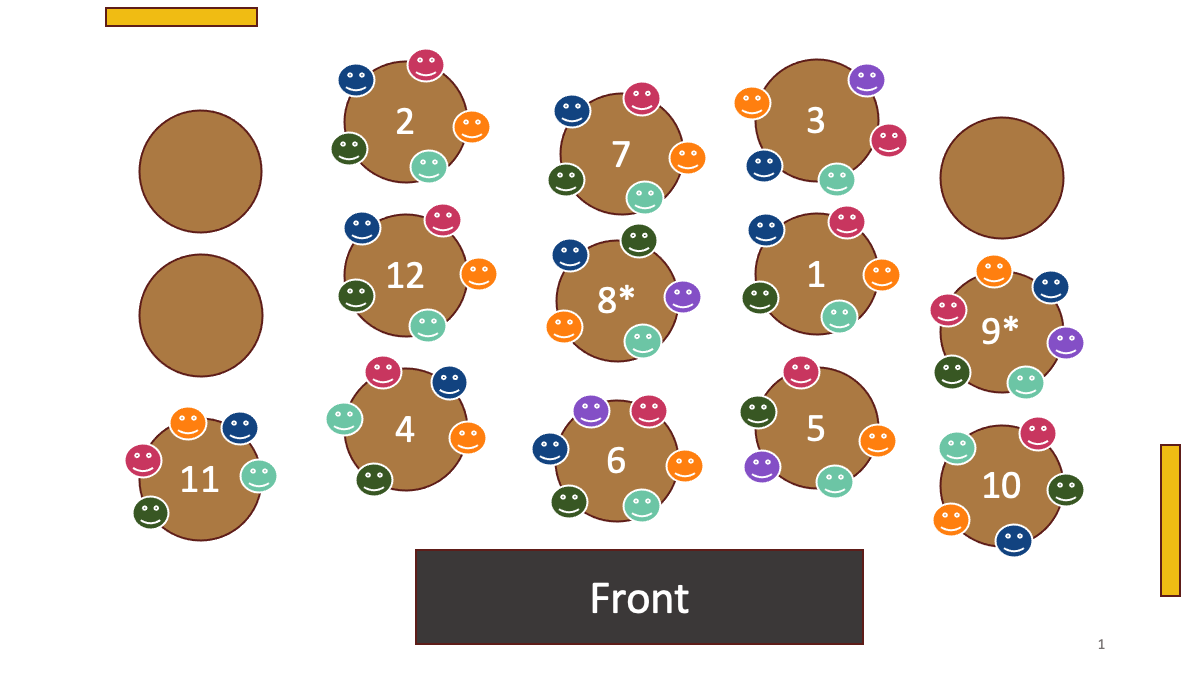
The blogging teams (Team 8 on March 10 and Team 9 on March 12) will swap places for the two classes, but otherwise the plan is the same for Tuesday and Thursday. The team that is blogging the class will have the (now stable!) center table.
Mid-Course Updates
I will talk more about the course updates based on the mid-course survey at the beginning of Tuesday’s class, but summarize the changes below:
-
Most people indicated that they are happy with their current teams and remain in the same tables and discussion groups. A few people have been moved in ways that we hope will improve the remainder of the semester. If you’ve been moved, you should either know the reason because it is related to what you submitted, or you didn’t submit a form at all and have been moved to help balance the sizes or other factors. If you did submit a mid-course survey but were moved or not moved in a way that you dislike, please reach out to me. If you didn’t submit a mid-course survey you don’t have grounds to complain, but you should realize that this was a required assignment which was made clear in the two classes in which it was discussed and the announcement and subsequent reminder sent in Canvas.
-
There have been some changes to the Schedule. No ones scheduled presentation time has been moved forward, but some are later than originally scheduled, and some previously scheduled News team presentations are now removed. With the adjustments, each team will be “Blog Team” twice (teams 6 and 7 will be jointly responsible for blogging the 16 April class), teams 1–4 will each be responsible for “News” twice and “Lead” once, and teams 5—12 will each be responsible for “News” once and “Lead” twice.
-
The expectations for presenting teams (both “News” and “Lead”) are now more specific:
-
Before 5:00pm on the day before you are scheduled to lead (so Monday for Tuesday classes and Wednesday for Thursday classes), share your plans and draft slides with me. You should do this in an email with all of the team members who are contributing cc’d so I can reply-all to everyone. The “before 5pm” deadline assumes that if I am able to get you feedback before 8pm you will have time to make revisions before class. If not, you should get me the slides before noon.
-
Be creative! All presenting teams so far have followed fairly closely the same format. This isn’t a bad format, but it is definitely not the best for most topics. Teams are encouraged to incroporate more interesting activities and use the class time in more varied ways.
-
Better presentations. I will provide some more guidance on general ways to improve presentations in Tuesday’s class (and maybe more in later classes), and although you are not required to follow everything I say it is expected that you’ll design presentations in ways that are mindful of it.
-
Readings for Week 8
Updates
-
Please remember to submit your Mid-Course Survey by midnight tonight (Friday 27 February).
-
Blog posts for Class 10 and Class 11 on AI-driven software development, and Class 12 (Adolescence of Technology) are now posted.
Readings for Tuesday, 10 March
-
Nic Fleming, Why we should limit the autonomy of AI-enabled weapons. Nature, 29 October 2025. [PDF]
-
National Security Commission on Artificial Intelligence, Final Report, Chapter 4: Autonomous Weapon Systems and Risks Associated with AI-Enabled Warfare, 2021. [PDF of Chapter 4] (The full report, which is over 700 pages is available here: https://reports.nscai.gov/final-report/.)
Optional additional reading: The Special Competitive Studies Project is in some ways a continuation of the NSCAI effort (with some of the same people involved, but unlike the NSCAI report which was requested by the Biden administration, the SCCP memos were not requested by the incoming administration). The memo on Defense Transition is the most relevant.
Reading for Thursday, 12 March
- John von Neumann, Can we Survive Technology?, Fortune Magazine, June 1955. [PDF]
John von Neumann wrote this while he was a member of the US Atomic Energy Commission. If you’re not familiar with von Neumann or think “inventing” the “von Neumann architecture” is among the most important things he did, you should at least skim his Wikipedia Page.
The version hosted by Fortune includes this note:
Editor’s note: This feature from June 1955 by John von Neumann tackles the profound questions wrought by radical technical advancement—in von Neumann’s day the atomic bomb and climate change. von Neumann was one of the twentieth century’s greatest and most influential geniuses. The polymath and patron saint of Game Theory was instrumental in developing America’s nuclear superiority toward the end of World War II as well as in framing the decades-long Cold War with the Soviet Union. In his time, von Neumann was said to possess “the world’s greatest mind.” Here is his characteristically pessimistic look on what the future holds.
I think it grossly mischaracterizes both the article and von Neumann by calling it “characteristically pessimistic”, but you should form your own opinion on it.
Class 12
The Blog for Class 11 is now posted.
Class 11
The Blog for Class 10 is now posted.
Readings for Week 7
Updates
- Blog posts for Class 8 (Interpretability) and Class 9 (Extractability) are now posted.
Reading for Tuesday, 24 February and Thursday, 26 Feburary
- Dari Amodei. The Adolescence of Technology Confronting and Overcoming the Risks of Powerful AI. January 2026.
This essay is intended as a follow-up to Amodei’s Machines of Loving Grace essay we discussed in Class 3. It is the only required reading for next week. It is quite long and covers a lot of ideas, so we will split it over the two classes next week.
(Recap from Earlier) Readings for Thursday, 19 February
- Jessica Ji, Jenny Jun, Maggie Wu, and Rebecca Gelles. Cybersecurity Risks of AI-Generated Code. CSET Report, November 2024. This is a long report and you are not expected to read the full report, but you should skim it to see what it covers, and pick sections that you think are interesting to read in more details. [Report Webpage] [PDF]
Read at least one of the two posts below:
-
Simon Willison, How StrongDM’s AI team build serious software without even looking at the code. 7 February 2026.
-
Nicholas Carlini, Building a C compiler with a team of parallel Claudes. Anthropic Blog, 5 February 2026.
Tables for Feb 17-19
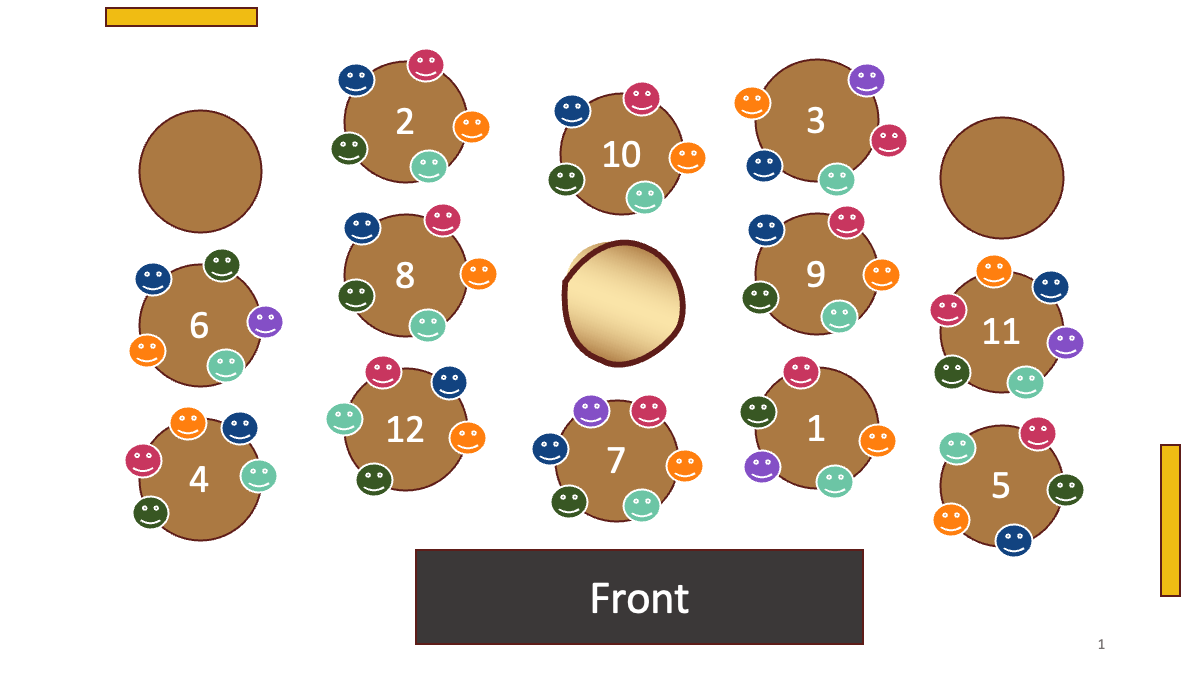
Here’s the Table Teams map for this week (Feb 17 and Feb 19 classes):
Readings for Week 6
Updates
-
CS Distinguished Speaker: Matthew Jagielski, Anthropic. ML Security Research in the Era of Agentic Systems, Friday, 13 February, 11:00am-noon, Rice 540.
-
Project Mini-Proposals are due Monday, 16 February (11:59pm). See the assignment in Canvas. The Overleaf Template provides a template for what is expected in your proposal: [PDF Link].
Reading for Thursday, 12 February (repeated from Readings for Week 4):
- Milad Nasr, Javier Rando, Nicholas Carlini, Jonathan Hayase, Matthew Jagielski, A. Feder Cooper, Daphne Ippolito, Christopher A. Choquette-Choo, Florian Tramèr, and Katherine Lee. Scalable extraction of training data from aligned, production language models. In International Conference on Learning Representations (ICLR) 2025. ICLR Web Link. (You can also see the review discussion: ICLR Forum)
One of the authors of this paper, Matthew Jagielski (now at Anthropic), will visit UVA on Friday, 13 February and give a Distinguished Talk at 11:00am Friday, 13 February, in Rice 540.
Readings for Next Week
Next week, we’ll focus on how AI tools are changing software development, and what that means both for programmers specifically and for humanity more broadly.
Readings for Tuesday, 17 February
-
Joel Becker, Nate Rush, Elizabeth Barnes, David Rein. Measuring the Impact of Early-2025 AI on Experienced Open-Source Developer Productivity. July 2025. [arXiv] [PDF Link] [METR Blog Post] [Simon Willison’s Blog]
-
(Optional) Agnia Sergeyuk, Eric Huang, Dariia Karaeva, Anastasiia Serova, Yaroslav Golubev, Iftekhar Ahmed. Evolving with AI: A Longitudinal Analysis of Developer Logs. International Conference on Software Engineering (ICSE), 2026. [arXiv] [PDF Link]
Readings for Thursday, 19 February
- Jessica Ji, Jenny Jun, Maggie Wu, and Rebecca Gelles. Cybersecurity Risks of AI-Generated Code. CSET Report, November 2024. This is a long report and you are not expected to read the full report, but you should skim it to see what it covers, and pick sections that you think are interesting to read in more details. [Report Webpage] [PDF]
Read at least one of the two posts below:
-
Simon Willison, How StrongDM’s AI team build serious software without even looking at the code. 7 February 2026.
-
Nicholas Carlini, Building a C compiler with a team of parallel Claudes. Anthropic Blog, 5 February 2026.
Readings for Week 5
Updates
- The blogs for Class 5 and Class 6 are now posted.
- Every project team should have received feedback on your Project Idea. The next main deliverable for the project is your Project Mini-Proposal, which is due Monday, 16 February. (This will be discussed in class on Tuesday.)
Reading for Tuesday, 10 February (repeated from Readings for Week 4)
- Cynthia Rudin. Stop explaining black box machine learning models for high stakes decisions and use interpretable models instead. Nature Machine Intelligence, May 2019. [PDF Link] [arXiv version] (less nicely formatted, but with fixed equations)
Reading for Thursday, 12 February:
- Milad Nasr, Javier Rando, Nicholas Carlini, Jonathan Hayase, Matthew Jagielski, A. Feder Cooper, Daphne Ippolito, Christopher A. Choquette-Choo, Florian Tramèr, and Katherine Lee. Scalable extraction of training data from aligned, production language models. In International Conference on Learning Representations (ICLR) 2025. ICLR Web Link. (You can also see the review discussion: ICLR Forum)
One of the authors of this paper, Matthew Jagielski (now at Anthropic), will visit UVA on Friday, 13 February and give a Distinguished Talk at 11:00am Friday, 13 February, in Rice 540.
Class 6
Tables for Feb 3-5
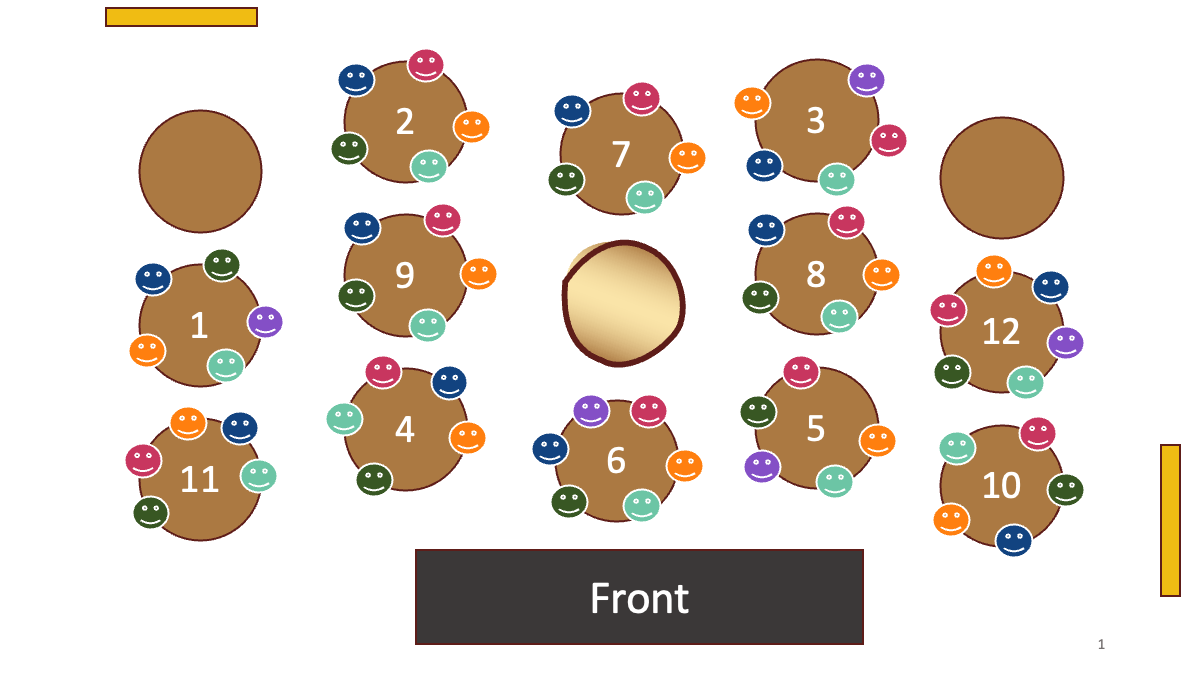
Here’s the Table Teams map for this week (Feb 3 and Feb 5 classes):
Readings for Week 4
Clinical use of AI in Medicine
Reading for Tuesday, 3 February (repeated from Previous Post, but with date updated due to snow day):
- Ethan Goh, Robert J. Gallo, Eric Strong, Yingjie Weng, Hannah Kerman, Jason A. Freed, Joséphine A. Cool, Zahir Kanjee, Kathleen P. Lane, Andrew S. Parsons, Neera Ahuja, Eric Horvitz, Daniel Yang, Arnold Milstein, Andrew P. J. Olson, Jason Hom, Jonathan H. Chen and Adam Rodman. GPT-4 assistance for improvement of physician performance on patient care tasks: a randomized controlled trial. Nature Medicine, February 2025. [PDF Link] [Web Link]
AI Bias and Interpretability
Our next main topic, which will be for the Thursday, 5 February and Tuesday, 10 February, is on biases in AI systems and how to measure and mitigate them. There is already a vast literature on this topic, and entire courses and research agendas focused on it, so we will only see a small slice of it in these two class (and may have more classes later that go in more depth or touch on other aspects).
Readings for Thursday, 5 February:
- (Expected for Everyone) Kyra Wilson and Aylin Caliskan. Gender, Race, and Intersectional Bias in Resume Screening via Language Model Retrieval. AAAI/ACM Conference on AI, Ethics, and Society (AIES2024). [PDF Link] [Original Source]
Some additional readings (that are not expected for everyone, but are optional, and potentially readings the Lead Team will include):
- Chapter 3: Classification from Solon Barocas, Moritz Hardt, Arvind Narayanan. Fairness and machine learning: Limitations and Opportunities (“FairML book”). MIT Press, 2023. (The full book is openly available at https://fairmlbook.org)].) [Chapter Link]
Readings for Tuesday, 10 February:
- Cynthia Rudin. Stop explaining black box machine learning models for high stakes decisions and use interpretable models instead. Nature Machine Intelligence, May 2019. [PDF Link] [arXiv version (less nicely formatted, but with fixed equations)]
Tables for Jan 29
Here’s the Table Teams map for Jan 29:
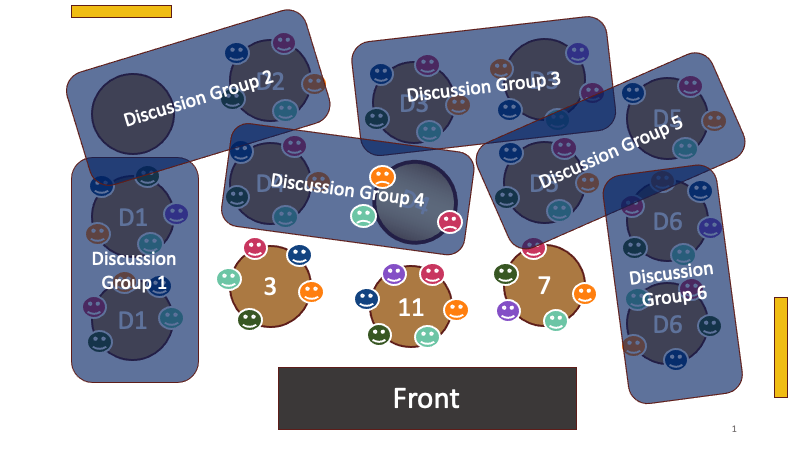
Instead of sitting in your “Table Teams”, the teams that are not presenting or blogging today will sit in your discussion groups so you have a chance to meet the people in your on-line discussion in person.
Blog for Class 4 Posted
The blog for Class 4 is now posted: Class 4 Blog: Data Centers / AI 2027 and AI as Normal Technology. Thanks to Team 10 for writing the blog post, and to Team 2 for presenting the News and Team 6 for leading the topic.